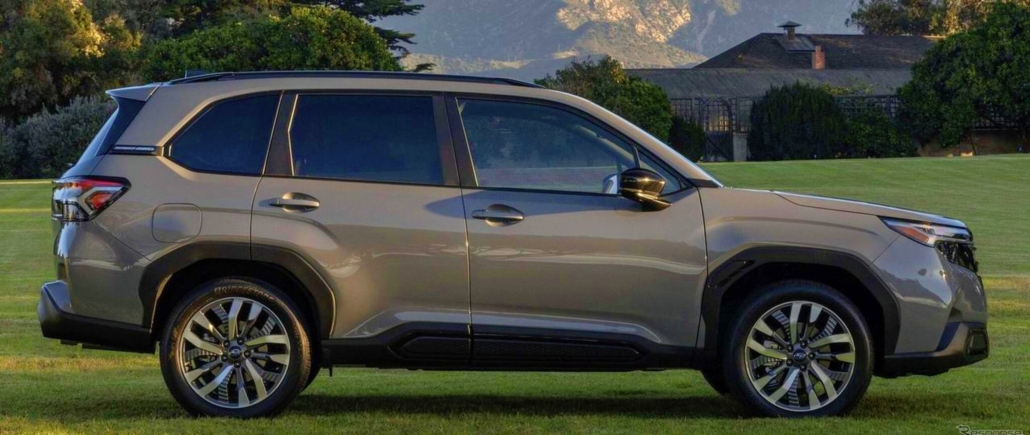
为什么 Forester XT 拥有斯巴鲁遗失的日系涡轮增压基因
In our last article, we broke down the hardcore chassis specs of the Subaru Forester XT, including its 50/50 weight distribution, symmetrical full-time AWD, X-MODE off-road system and 3-level SI-DRIVE modes. Many Subaru enthusiasts share the same question: why does the turbocharged Forester XT deliver an entirely different driving experience compared to NA Forester variants sharing the same platform?
The answer lies not in official spec sheets, but in Subaru’s decades-old JDM turbo DNA reserved exclusively for the Japanese domestic market. Most casual Subaru fans only know the brand’s signature boxer engine and symmetrical AWD, ignoring that turbocharged powertrains built Subaru’s reputation in the 1990s JDM golden era. Today’s Forester XT is the last mass-production street SUV carrying authentic Subaru rally turbo engineering.

WRC Origins: Subaru’s Unique JDM Turbo Philosophy
Japanese automakers took divergent performance routes in the 1990s. Honda focused on high-rev naturally aspirated engines, Mitsubishi prioritized high-power straight-line turbo acceleration, while Subaru carved out a niche built for off-road rally scenarios.
Subaru launched the iconic EJ-series boxer engine in 1989. As a small-scale automaker with limited market influence, Subaru bet all resources on the WRC World Rally Championship to transfer race-proven technology to consumer cars. Unlike inline engines, boxer engines lower vehicle gravity and reduce engine vibration inherently. Paired with a turbocharger to fix low-end torque shortage, the whole powertrain was co-developed with symmetrical AWD for snow, gravel and muddy rally roads from the start.
Different from Mitsubishi’s turbo tuning for straight-line speed, Subaru JDM turbochargers are calibrated for all-terrain traction balance. This core design explains why the Forester XT outperforms most compact SUVs in wet and slippery road conditions.

JDM Market Segregation: Japan-Only Turbo Tech Barrier
North American, Chinese and JDM Forester XT share similar official horsepower figures, but deliver inconsistent real-world performance. Subaru has long implemented a Japan-first technical strategy for turbo hardware and software.
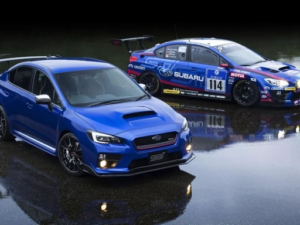
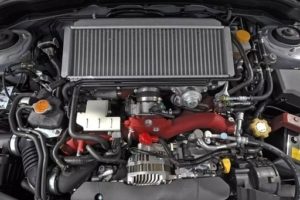
- The legendary EJ20 sequential twin-turbo system. Featured on JDM-only Legacy GT in the 1990s, the dual turbo setup eliminated turbo lag perfectly with a small turbo for low RPM and a large turbo for high RPM. It was never exported to overseas markets.
- Internal engine component differences. The iconic JDM-only EJ207 STI engine adopted full forged pistons and connecting rods, while all export turbo engines used cast components with downgraded modification potential. The FA24 turbo engine equipped on Chinese-spec Forester XT is the closest street-legal variant to original JDM internal tuning.
- Locked OEM ECU mapping. JDM Subaru turbo cars come with three factory-built boost maps for mountain, snowy and highway scenarios. All overseas versions disable these hidden maps. The Forester XT Sport Sharp mode is simply a restricted version of native JDM sport boost tuning.

Forester XT: The Last Authentic JDM Turbo SUV
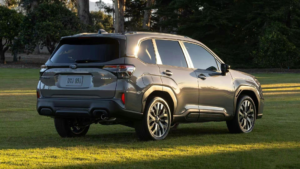
Tightening global emission regulations forced Subaru to discontinue the EJ engine lineup and gasoline-powered WRX STI after 2010. Subaru eliminated turbo options across the XV and Outback lineups, leaving only the Forester XT with complete turbo heritage.
The FA24 turbo engine is not an all-new design. It is an emission-compliant upgrade of classic EJ turbo architecture. Unlike mainstream compact SUVs that add turbochargers to existing NA chassis, the Forester XT integrates boxer engine, turbocharger and symmetrical AWD in original design, bringing superior body roll control and wet-road stability.

Correcting Common Misconceptions: Forester XT as a Sleeper SUV
Many automotive reviewers criticize the Forester XT for mediocre 0-60 mph acceleration. This judgment ignores core JDM road conditions: narrow winding mountain roads and strict speed limits in Japan.
Subaru JDM turbo tuning prioritizes mid-range torque response from 15km/h to 80km/h, zero turbo lag and dynamic AWD torque distribution, rather than straight-line acceleration. With a plain family-oriented exterior and rally-grade chassis, the Forester XT is a classic JDM sleeper SUV.


Facing global electrification, Subaru is shifting to hybrid powertrains and motor-driven AWD. The pure gasoline boxer turbo + symmetrical AWD combination will be permanently discontinued soon.
The Forester XT condenses 30 years of WRC rally experience and JDM mountain road calibration. It represents Subaru’s pragmatic, non-commercial engineering pursuit. Understanding its hidden JDM turbo DNA helps explain every counterintuitive factory tuning on the Forester XT.


发表评论
想加入讨论吗?欢迎随意贡献!